












new games
 Subway Surfers Iceland
 Subway Surfers Mexico
 Blocky Runner
 Subway Run
 Stickman Run
 Steal and Run
 Robber Run
 Subway Surfers Winter Wonderland
 Subway Surfers Classic
 Subway Surfers Osaka
 Subway Surfers Mumbai Holi
 Subway Surfers: New York for Thanksgiving
 Subway Surfers World Tour: Winter Xtreme
 Subway Surfers World Tour: Atlanta
 Subway Crackers
 Subway Surfers Oxford
 Subway Surfers Underwater
 London: Lucky CreaturesWinter Extreme 2026
 Rob a Brainrot
 Granny
 2v2.io
 Hole.io
 Speed Stars
Sorry Bob
Despite having a surgical setting, Sorry Bob makes no genuine effort to replicate a hospital environment. There isn't a chief physician barking orders or the frenetic blasting of cardiac monitors.
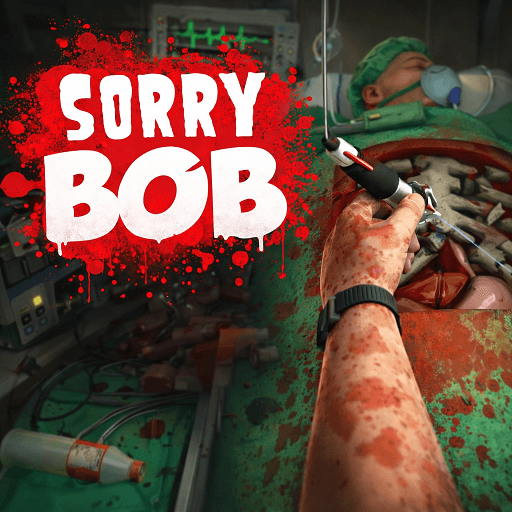
An Operation That Never Turns Out As Expected
In front of you are a dead body, a variety of known and unknown medical instruments, and nearly unwilling hands. The game then reveals that it is not flawless medicine, but rather a simulation of human frailty and faults. This is the job of a person functioning in a difficult situation, not that of a perfect doctor. You have to adjust when doing challenging surgeries using unmanageable instruments.
The procedure for carrying out the surgery
I apologize, but Bob doesn't need you to conduct the procedure flawlessly. As long as you continue to analyze the scenario, the game tolerates awkwardness, ill-placed cuts, and superfluous moves. In contrast to action or strategy games, the framework produces a totally distinct trajectory. There are no significant victories—just the satisfaction of outperforming oneself. Tiny decisions must be made during each procedure, such as which part to treat, which equipment to employ, and what dangers to accept. Failure is viewed as information for the subsequent try rather than the end. As a result, the play pace is cumulative, making it appropriate for players who prefer to see development happen gradually.
Control Turns Into the Main Problem
This challenge focuses on hand movement in space, in contrast to other games that prioritize process. Needles, syringes, forceps, and scalpels are all examples of objects with inertia. It's difficult enough to lift a tool, let alone use it precisely. Players must relearn hand-eye coordination by modifying force, angle, and pace due to this control challenge. You get more accustomed to the simulation system with time, but you don't get better at medicine.
Running GamesAction GamesEscape GamesEndless runnerSubway Surfers World Tour